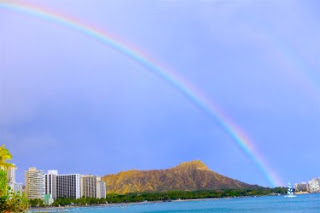
 I was born and lived in Hawaii for most of my life, but additionally spent four years or more in California, Louisiana and the Washington, DC area, plus two six month sabbaticals in Tokyo. I graduated from Louisiana State University in Baton Rouge in 1972, so more than half a century has passed since I last lived in this state. What has changed in Louisiana during this period?
 1972 2026
- Population: 3.76 million 4.62 million
- Black % 31% 29.5%
- Asian % 0.1% 2.0%
- Cajun % 2.0% 1.0%
 However, this drop is not real, for the Census Bureau adjusted coded ethnicities and details like primary ancestry.
- It is not certain what the Cajun count is today, but going by the census, the 800,000 or so Cajuns of a half century ago now number 54,000, or something closer to 0.1%.
- With all this drastic decline, Google AI says:


I asked Google AI, what has changed most about Louisiana over the past half a century.
- Overall, Louisiana is battling to balance its traditional, resource-based economy with the rapid decline of its natural environment, resulting in a state that is increasingly vulnerable to climate change, yet continuously rebuilding.
- Louisiana has experienced profound, often detrimental changes, with coastal land loss and environmental vulnerability being the most significant transformation. The state has transformed from a landscape with a largely intact, protective coastline to one that loses roughly a football field of land to the ocean every hour, totaling over 2,000 square miles since the 1930s.


- The total land area of the island of Oahu, which is where Honolulu is located, is only 597 square miles.

- The land area of the islands of Oahu, Maui and Kauai, combined, is 1885 square miles.
- In other words, the State of Louisiana has lost more land than the combined area of Oahu, Maui and Kauai since the 1930s.

- Intensified Hurricane Vulnerability: Due to the loss of natural barrier wetlands and climate-related factors, hurricanes have become stronger and wetter, resulting in intensified storm surges, as seen with Hurricanes Katrina and Ida.

- Following Hurricane Katrina in 2005, the New Orleans area underwent massive change, including the construction of a $14.5 billion levee system, which successfully held back the surge during Hurricane Ida in 2021.
- Industrialization & "Cancer Alley": The stretch of land along the Mississippi River became heavily industrialised with petrochemical plants in the late 20th century, leading to high concentrations of air and water pollution.

- Watch this video.


Before I leave this state, some history of Louisiana,
- Lands here formed from sediment washed down the Mississippi River.
- When I lived here, numerous people I befriended had never seen a mountain. However Driskill Mountain is 535 feet high.

- State has 18 Native American tribes.
- First European explorers came in 1528 from Spain.
- France claimed the territory in 1682.
- Named after King Louis XIV, King of France from 1643 to 1715.
- Slavery began in 1708.
- Louisiana from 1762 to 1801 was under Spanish rule.

- France then took over, and Napoleon sold Louisiana to the U.S. in 1803. The Louisiana Purchase:

- Authorized by President Thomas Jefferson.
- Land size of 828,000 square miles.

- Cost $15 million, or roughly 3 cents/acre.

- This land today is worth $1.2 trillion, doubling the size of the U.S.
- Roughly 6.3% became Louisiana.
- The rest mostly became all or part of 14 other states.
- A small portion was ceded to Canada, become part of Alberta and Saskatchewan.

- Admitted to the Union in 1812 as the 18th state.

- A slave state, it was one of the original seven members of the Confederate States, and in 1840, New Orleans had the biggest slave market in the U.S.
- Harbored escaped Filipino slaves from the Manila Galleons, establishing the first settlement of Asians.
- In 1860, 47% of Louisiana were slaves, 331,726 of the total population of 708,002.
- In 1900, the state population was still 47% Black.
- 1960, 32% Black.
- Louisiana has maintained its French heritage, for counties are known as parishes, and the legal system is different.
- Has never had an official language.

- Hurricane Katrina devastated New Orleans in 2005. 80% of the city was flooded.

- Four largest cities are New Orleans (383,997), Baton Rouge (227,470), Shreveport (187,593) and Lafayette (121,374).
- Based on national averages, Louisiana frequently ranks low among U.S. states in terms of health,[15] education,[16][17][18][19] and development, with high rates of poverty[20][21][22] and homicide. In 2018, Louisiana was ranked as the least healthy state in the country, with high levels of drug-related deaths. It also has had the highest homicide rate in the United States since at least the 1990s.[23][24][25]


- Louisiana hosted the first Mardi Gras.
- French-Canadian explorer Pierre Le Moyne d'Iberville celebrated Mardi Gras on 2March1699 near on the Mississippi River near present-day Buras, Louisiana, 60 miles south of New Orleans.
- The second was 1703 in Mobile, which was then part of French Louisiana.
- New Orleans first celebrated in 1718. Parades came in 1837.

- The first Carnival festival in Rio de Janeiro occurred in 1723, brought by Portuguese settlers.

- Creole/Cajun cuisine (jambalaya and gumbo) and the birth of jazz and zydeco music.


- Take restaurants.
- Ruth's Chris Steakhouse.

- 133 in the country. Fourth largest steakhouse chain,
- In 21 countries.

The top five chicken chains are Chick-fil-A, Popeyes Louisiana Kitchen (Arabi, a suburb of New Orleans in 1972, which failed, so Kenner was #2 and Baton Rouge #3), Raising Cane's Chicken Fingers (Baton Rouge in 1996), Jolibee (Philippines), and Kentucky Fried Chicken.


- While there are only five Acme Oyster Houses, all in the Gulf, I had my first raw oysters here in 1969.

- First opened in the French Quarter in 1910.
- Incidentally, Oysters Rockefellers were created by Jules Alciatore (son of founder) at Antoine's Restaurant in New Orleans. Named after John D. Rockefeller. Antoine's first opened in 1840, and is recognized as the oldest family-run restaurant in the USA.

- Crawfish:

- Louisiana Native Americans are reportedly, the first to eat crawfish.
- Crawfish is also called crayfish in some locations.

- I am allergic to crustaceans, but not mollusks. I also seem not to be bothered by freshwater-reared crustaceans.

- Crawfish from Louisiana did not harm me.
- Later, I found out that Malaysian Prawns grown in freshwater in North Oahu also did not bother me.

- Apparently, the culprit is tropomyosin, a muscle protein, is the cause. While all crustaceans have this protein, there is a subtle differene in protein structure from freshwater species. The difference is so sensitive, that many with this allergy from saltwater crustaceans, also suffer from the freshwater variety.


One of my best friends in the chemical enginering department at LSU is Harry Toups. We got our PhDs there around the same time a little more than 50 years ago. While I returned to Hawaii, after a long career at Exxon, he went back and now teaches at LSU. His wife Margaret, Harry and we had lunch today. Of course, at Acme Oyster House in New Orleans. I ate raw and broiled oysters, crawfish and some Cajun dishes. Some photos.


Broiled oysters.


Best lunch I've had on this trip.
-
Comments
Post a Comment